
Boostez vos conversions d'essai gratuit avec une séquence de nurturing email IA. Découvrez comment l'IA transforme l'activation utilisateur et la prévention du churn pour les SaaS.
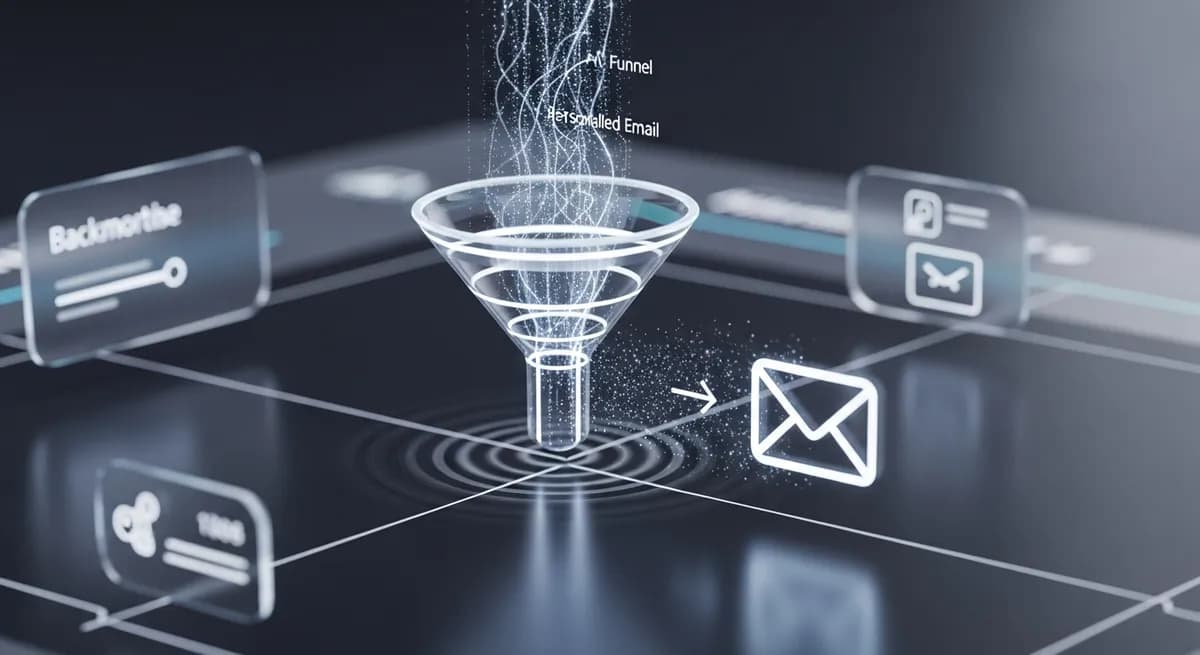
Is your SaaS company struggling to convert free trials into paying subscribers? Are your email nurturing campaigns lacking personalization and impact? In 2026, the rapid evolution of user expectations and inbox saturation are making generic approaches obsolete. To stand out, companies must adopt smarter, more responsive strategies. An AI-powered email nurturing sequence represents the future of marketing for SaaS businesses, offering an unprecedented opportunity to hyper-personalize every interaction, engage users at the right moment, and maximize conversion rates. This guide explores how artificial intelligence is redefining email nurturing, from technical architecture to ROI optimization and ethical considerations.
Today's users expect seamless and relevant experiences. Generic email campaigns, which treat all prospects the same way, are not only ineffective but can also harm your brand image. They do not meet the specific needs of each user, leading to low engagement rates and wasted marketing resources.
AI is transforming customer lifecycle marketing and user activation by enabling personalization at a previously impossible scale. Instead of relying on general assumptions, AI analyzes massive volumes of data to understand individual behaviors, preferences, and intentions. This allows SaaS companies to create unique and highly relevant user journeys.
According to a Gartner Marketing Symposium report from January 2026, 85% of marketing leaders are already using or testing generative AI for content creation, including emails. This massive adoption underscores the recognition of AI's potential to deliver hyper-personalization at scale, which is impossible to achieve manually. AI enables sending the right message, at the right time, to the right person, thereby maximizing the impact of each email.
To build an effective AI-powered email nurturing sequence, a robust technical architecture is essential. At the heart of this stack are a CRM (Customer Relationship Management) system and a CDP (Customer Data Platform). The CRM manages customer interactions and sales data, while the CDP centralizes and unifies all user data from various sources (website, application, customer support, etc.).
These platforms act as the brain of your strategy, providing AI with the detailed information needed to understand each user. AI-integrated email marketing tools then connect to this data stack. They use information from the CRM and CDP to automate the sending of personalized emails, trigger messages based on specific behaviors, and optimize campaigns in real-time.
Specific tools complement this ecosystem. AI copy generators, for example, can draft personalized email drafts in seconds, while send-time optimization platforms use AI to determine the ideal time to send each email. This technological integration allows a shift from mass marketing to an individualized and dynamic approach.
Segmentation is the cornerstone of any successful email marketing campaign. AI elevates this practice to a higher level through predictive segmentation. Unlike traditional methods based on fixed rules (e.g., 'all users who signed up last month'), AI analyzes data patterns to predict users' future actions.
According to McKinsey & Company, predictive segmentation can increase campaign conversions by up to 25% compared to rule-based segments. AI identifies users most likely to activate, convert, or churn, allowing messages to be targeted with unparalleled precision. For SaaS, this is crucial for user activation and churn prevention.
Behavioral triggers are another essential aspect. AI can automatically initiate personalized emails in response to specific user actions (or inactions) within your SaaS application. For example, an email can be sent if a user hasn't used a key feature after a certain time, or if they've reached an important milestone in their journey. These targeted interactions are vital for guiding users to their 'aha moment,' as highlighted by OpenView Partners, who indicate that activated users are 5 to 10 times more likely to convert to a paid plan.
Continuous analysis of usage data refines these segments and triggers. AI can identify warning signs of disengagement (e.g., a drop in in-app activity) and trigger proactive re-engagement campaigns, helping to reduce churn.
Generative AI has revolutionized content personalization. To maintain your brand's authenticity, it's crucial to train the AI on your own voice and style. Feed it your past emails, style guides, and marketing content so it learns the nuances of your communication. This ensures that AI-generated emails resonate with your audience and reinforce your brand identity.
Examples of successful personalization abound. Imagine an email that directly references a specific user action in your application: 'We noticed you used feature X three times this week. Here's an advanced guide to get the most out of it.' According to the Salesforce State of Marketing Report 2025, hyper-personalization, including references to in-app actions, can generate transaction rates 6 times higher than generic emails.
However, mistakes must be avoided. Generic personalization ('Dear [Name]') has become the norm and no longer impresses. Worse, intrusive personalization, which uses sensitive data without explicit consent, can alienate users. Balance is key. AI can also be integrated for dynamic email subject line writing, as reported by MarTech Today in March 2026, adapting subject lines based on each user's engagement history. Furthermore, AI-driven send-time optimization can increase open rates by 17% by delivering messages when each subscriber is most likely to engage, according to a Campaign Monitor study.
For SaaS companies, it's essential to look beyond traditional metrics like open rates (which have become less reliable with privacy protections like Apple MPP, according to HubSpot) and focus on more meaningful KPIs. Key indicators include the trial-to-paid conversion rate, user activation rate (when the user reaches their 'aha moment'), and churn reduction. The median conversion rate from a free trial to a paid subscription for SaaS is around 15%, but this varies considerably, according to Baremetrics SaaS Benchmarks 2025.
AI is a major asset for continuous optimization. It facilitates multivariate testing, which goes far beyond traditional A/B tests. AI can simultaneously test dozens of variations of copy, images, and CTAs to identify the optimal combination for different segments. HubSpot noted that these tests can improve click-through rates (CTR) by over 30% in some cases. Post-send data analysis is crucial for refining strategies and improving marketing automation. AI can identify what works best for each segment, allowing for dynamic sequence adjustments.
With an average ROI of $42 for every dollar spent on email marketing, according to the Litmus 2025 State of Email Report, AI-driven optimization ensures that every investment is maximized. Click-through rates for AI-optimized campaigns in the software industry were around 5.8% in Q4 2025, compared to an average of 2.6% for non-optimized campaigns, as indicated by Mailchimp.
The use of AI to analyze user behavior raises significant data privacy concerns. Compliance with regulations like GDPR is non-negotiable. Companies must be transparent about how data is collected and used, and ensure appropriate consent is obtained. An ethical approach to AI builds user trust and brand reputation.
Despite AI's power, the role of the human marketer remains indispensable. AI is a tool, not a replacement. Marketers are responsible for the overall strategy, defining objectives, reviewing AI-generated content, and adjusting the brand voice. As Reddit users in r/SaaS highlight, the biggest challenge is maintaining an authentic brand voice, which requires 'human intervention' for final review.
Examples of 'bad' AI include emails that sound robotic, incorrect personalization, or messages that lack empathy. Human intervention allows for correcting these errors, injecting creativity, and ensuring messages resonate emotionally with the audience. The most successful campaigns use AI for data analysis and personalization, but it's the human who guides the overall strategy and message, as noted by the SaaS Marketers community on Slack.
Integrating an AI-powered email nurturing sequence is no longer an option but a necessity for SaaS companies aiming for growth in 2026. By leveraging AI's power for hyper-personalization, predictive segmentation, and real-time optimization, you can not only improve your trial-to-paid conversion rates but also enhance user engagement and reduce churn.
The key to success lies in a balanced combination of advanced AI technology and human expertise. By adopting a strategic and ethical approach, your SaaS company can create exceptional customer experiences that generate measurable and sustainable results. Digital at the service of your growth is more than ever a reality with AI.
A lire ensuite

La cohérence de marque n'a jamais été aussi cruciale. Une étude de Lucidpress (Marq) de 2019 a révélé qu'une marque cohérente peut augmenter les revenus jusqu'à 23 %. Avec l'essor rapide ...

L'intelligence artificielle générative révolutionne la création de contenu, mais comment garantir que votre message reste précis, éthique et fidèle à votre marque ? L'intégration de l'IA ...

En 2026, l'intégration de l'intelligence artificielle générative dans les stratégies de contenu est devenue la norme. Pourtant, cette révolution s'accompagne d'un défi majeur : maintenir ...